
Introduction: This Decision Can Save or Ruin Your Study Abroad Dream
Choosing the wrong course is one of the most expensive mistakes international students make—and most people don’t realize it until it’s too late.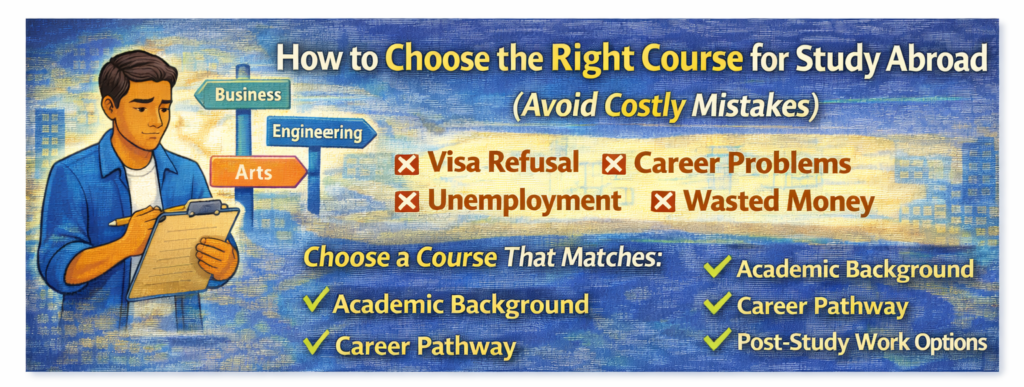
Every year, students with excellent grades and genuine intentions:
- Get visa refusals
- Struggle academically
- Waste savings on programs they don’t enjoy
- Graduate into unemployment
Not because they weren’t smart—but because they chose the wrong course for international study.
This guide explains how to choose the right course for study abroad, using real-life patterns we see daily in education consulting—especially in Nigeria and similar markets.
If you want clarity before you apply, read carefully.
Why Course Selection Matters More Than the Country
Most students ask:
“Which country should I apply to?”
But immigration officers and universities often ask:
“Why this course for this student?”
Your course choice affects:
- Visa approval
- Statement of Purpose (SOP) strength
- Academic performance
- Post-study work eligibility
- Career outcomes after graduation
A weak course choice can invalidate even a strong profile.
Common Course Selection Mistakes Students Make
1. Choosing a Course Based on What Friends Are Studying
Many students pick courses because:
- “My friend is studying it”
- “Everyone is doing it”
- “It’s popular now”
This leads to:
- Weak SOPs
- Inconsistent academic progression
- Visa suspicion (“Why this course?”)
Immigration officers look for logic, not trends.
2. Picking a Course Only Because It’s Cheap
Low tuition is important—but cheap courses often cost more later:
- Limited job opportunities
- No post-study work pathway
- Poor institutional reputation
A cheaper course with weak outcomes can be more expensive in the long run.
3. Jumping Into an Unrelated Field Without Justification
Switching fields is possible—but unexplained switches are risky.
Example:
- Accounting → Nursing
- Engineering → Business Management
Without:
- Clear motivation
- Skill bridge
- Career explanation
This is one of the top visa refusal triggers.
Step-by-Step: How to Choose the Right Course for Study Abroad
Step 1: Start With Your Academic Background
Ask yourself:
- What did I study previously?
- What subjects did I perform best in?
- What skills do I already have?
Strong applications show academic continuity, not confusion.
Step 2: Align the Course With Your Career Path
Your course should clearly answer:
“What problem does this qualification solve for my future?”
Immigration officers prefer:
- Purpose-driven study
- Career-linked programs
- Skills-based outcomes
Avoid vague goals like:
- “I want international exposure”
- “I want better opportunities”
Step 3: Check Post-Study Work Opportunities
Not all courses qualify for:
- Post-study work visas
- Skill shortage lists
- Graduate employment routes
Before choosing, verify:
- Country policies
- Course relevance to labor market
- Work rights after graduation
This is where many students get stuck after finishing school.
Step 4: Match Course Level to Your Profile
Examples:
- Weak undergraduate result → jumping straight to MBA (high risk)
- No experience → applying for advanced professional programs
Your course level must match:
- Your academic strength
- Your work experience
- Your maturity level
Step 5: Choose Institutions Strategically (Not Emotionally)
Top-ranked universities are good—but mid-tier schools with strong outcomes often work better for international students.
Focus on:
- Accreditation
- Graduate employability
- Visa approval track record
- Student support
Real-Life Case Study: When the Right Course Changed Everything
A Nigerian student with:
- Average grades
- No international exposure
Initially wanted:
“Any business course in Canada”
After proper evaluation:
- Switched to a specialized diploma aligned with prior experience
- Rewrote SOP with clear career logic
- Applied to a realistic institution
Result:
- Visa approved
- Part-time job within 3 months
- Clear pathway to permanent options
The difference wasn’t money—it was course strategy.
How the Right Course Strengthens Your SOP
A good course choice automatically improves:
- SOP clarity
- Visa officer confidence
- Interview responses (if required)
When your course makes sense:
- You don’t need to exaggerate
- You don’t need fake experience
- Your story becomes natural and believable
When You Should Seek Professional Guidance
You need expert input if:
- You’re changing fields
- You had previous visa refusal
- Your grades are weak
- You’re unsure about post-study work options
At HakBizz, course selection is not random—it’s profile-based and visa-conscious.
👉 Study Abroad Consultation
- 👉 Why Many Study Abroad Applications Fail (Even With Good Grades)
- 👉 How Embassies Spot Fake Bank Statements: A Detailed Guide.
- 👉 Explore these must-have templates and secure your travel success today!
Final Thoughts: Choose Strategy Over Speed
The best course is not:
- The cheapest
- The most popular
- The fastest
The best course is the one that:
- Matches your past
- Supports your future
- Makes sense to an immigration officer
Choose wisely—your entire study abroad journey depends on it.